Listed churches and country houses, a London school and large factory sites. Here is what each building needed, what we found and what we did.
ListingGrade II*
Built1575
WorkDesign and installation
FinishConcealed conductor
Case 01 · Heritage
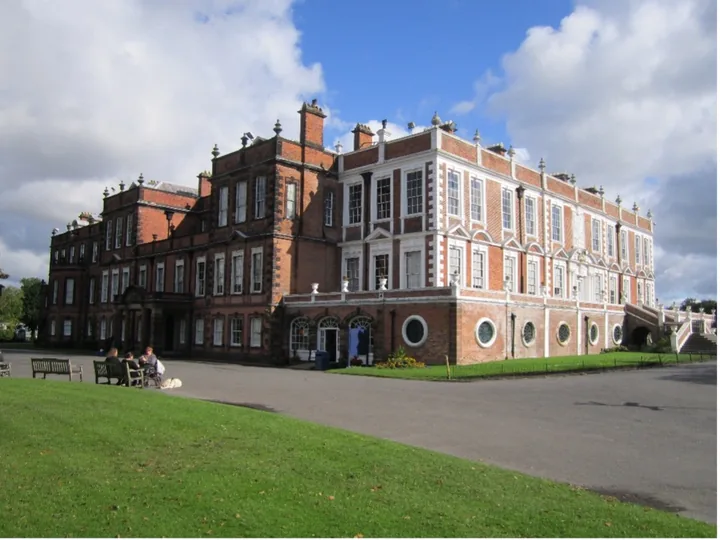
Croxteth Hall
West Derby, Liverpool · Liverpool City Council
Croxteth Hall is a country estate and Grade II* listed building in the West Derby suburb of Liverpool. It was built in 1575. Due to the grade II* listed status, architectural constraints were in place. After multiple site meetings and surveys, we were tasked with designing and installing a discreet lightning protection system. We used 8mm dowel PVC-covered conductor tape to dress and install the system. This enabled us to use the natural lines of the structure to conceal the system and reduce its visual impact. Our team completed the project on-time and within budget.
Lightning Protection Testing UK exceeded our expectations on this project and would like to thank all involved.
Mal Brett - Liverpool City Council
ClassClass III
Earth locations56
Programme4 weeks
StandardBS EN 62305
Case 02 · Food manufacturing
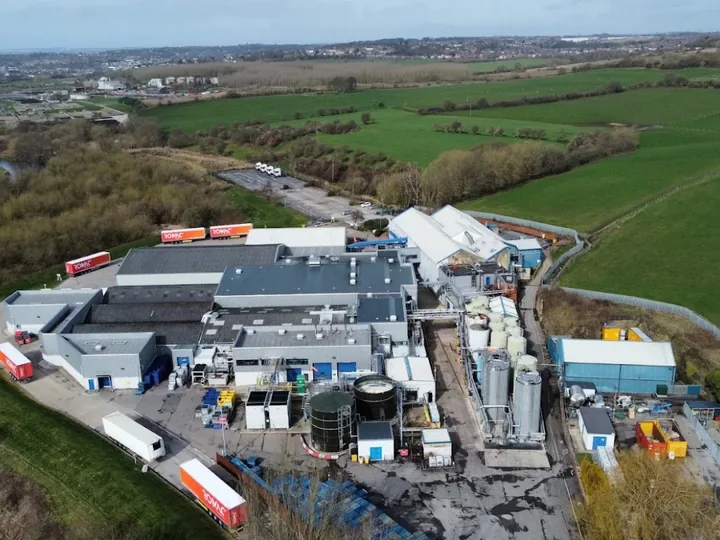
Kerry Foods
The Healey Complex, Ossett, West Yorkshire · Kerry Foods Ltd
The site
The Healey Complex in Ossett is a large food-production site: several connected production buildings, plant, tanks and service yards, with lorries moving all day. On a site like this, a lightning strike is not only a risk to the buildings. It can take out electrical systems and stop production.
The brief
We carried out a full site survey and a lightning risk assessment to BS EN 62305-2. The assessment weighs the size and layout of the buildings, the local lightning density, how many people are on site, what is inside and the services coming in, along with what a strike would cost the site in lost production.
What we found
The assessment showed that the whole site needed protecting to Class III under BS EN 62305. Class III sets the size of the air-termination mesh (15 m by 15 m) and the spacing of the down conductors (about every 15 m around the outside) that the system has to meet.
What we did
We designed and installed a full Class III lightning protection system across the site, with 56 earth locations. Each one takes a down conductor to earth through its own electrode, with a test point so the system can be checked at every future inspection. The work took four weeks.
The result
One system covers the whole site to a single standard, with documented test points ready for its periodic inspections.
Started asTest and inspection
Upgraded toClass IV
StandardBS EN 62305
SectorEducation
Case 03 · Education
The Japanese School
Acton, London W3 · The Japanese School Ltd
The brief
We were first asked to test and inspect the school’s existing lightning protection system.
What we found
The system was historic and gave very little protection to the building or the people in it. Older systems like this were often fitted to earlier codes, and on a school the people inside are the main thing a risk assessment protects.
What we did
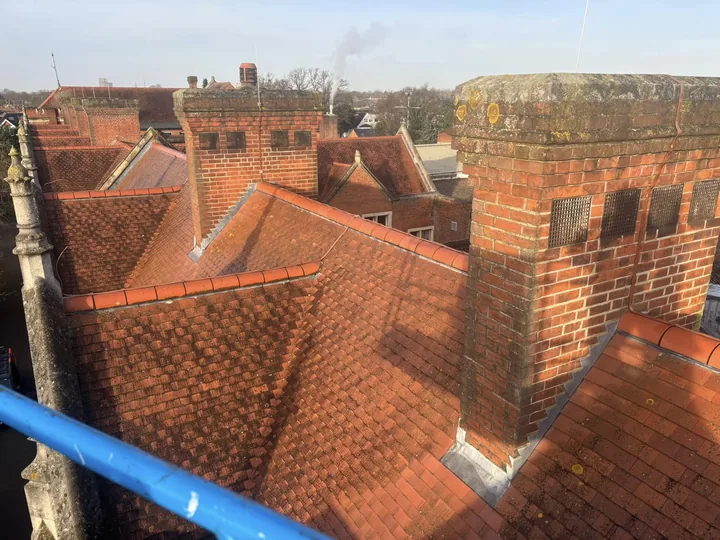
We wrote a full report with detailed risk assessments to BS EN 62305-2. They showed the school needed a proper system, and the decision was made to upgrade it to a fully compliant Class IV system. We then carried out the upgrade across a busy roofscape of clay tiles, valleys and tall chimney stacks.
The result
A historic system that gave little real protection was replaced with one that meets BS EN 62305, documented for the school’s records and future inspections.
Why it matters
Many buildings have a lightning protection system that is decades old and has not been properly tested. A test and inspection is often how owners find out it does not work.
Trusted on listed buildings, schools and working factoriesConstructionline Gold, CHAS and PQS approved under SSIP, with CSCS-carded engineers and IPAF membership for access work. Send us your site and we will send you a price.
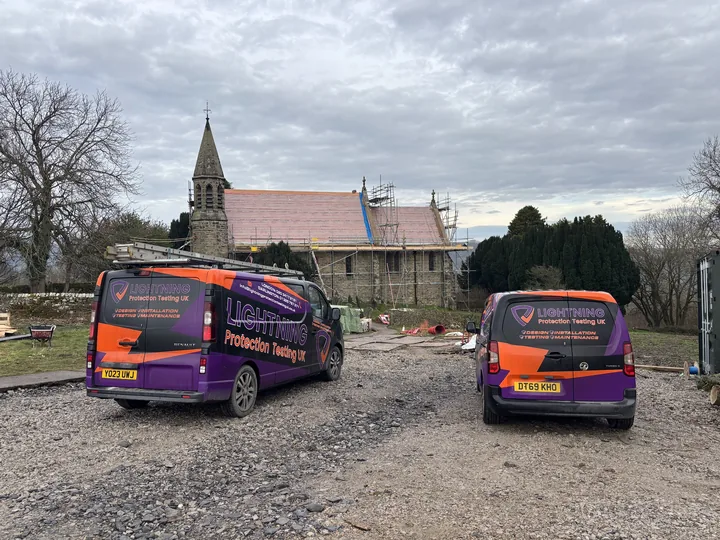
Hudswell, Richmond, North Yorkshire · St Michael and All Angels Church
The building
St Michael and All Angels is a Grade II listed church on the hillside at Hudswell, near Richmond. With a listed building, any change to the fabric has to respect what makes the building special.
The brief
After several site meetings with the client and conservation, we agreed to supply and install a discreet lightning protection system.
What we did
Where it was practical, we concealed the air-termination network below the roof coverings. We ran the down conductor behind the rainwater downpipe, so it follows a line the building already has. Where the conductor had to show, at the stone cross finial, it follows the stonework closely.
The result
The church is protected with minimal visual impact on a Grade II listed structure.
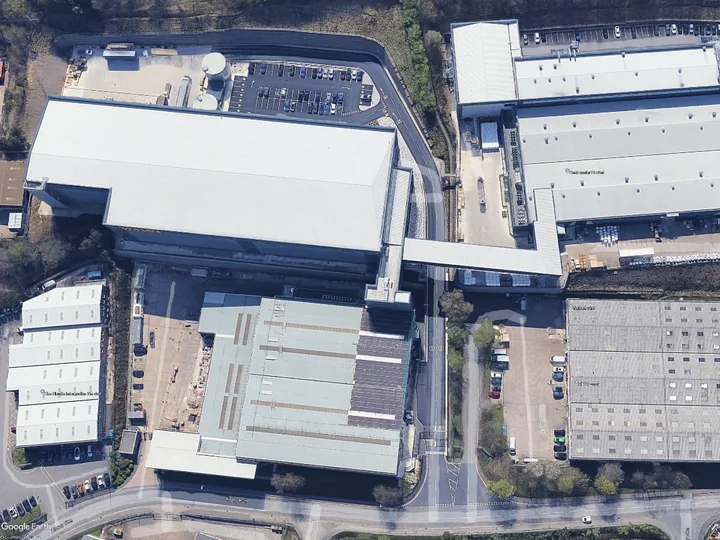
Aerial view: Google Earth
ClassClass III
Earth locations70
Programme6 weeks
StandardBS EN 62305
Case 05 · Manufacturing
A-SAFE International
Habergham Works, Elland, West Yorkshire · A-SAFE International Ltd
The site
Habergham Works on Ainleys Industrial Estate is a large manufacturing site made up of several big-span industrial buildings.
The brief
We carried out a full site survey and lightning risk assessment to BS EN 62305-2.
What we found
The assessment showed that the whole site needed protecting to Class III under BS EN 62305.
What we did
We installed the system across the site’s buildings with 70 earth locations, each with a test point for future inspections. The work took six weeks.
The result
Every building on the site is protected to one standard and recorded for routine testing.
Site200,000 sqm
Earth locations60+
WorkSurvey to installation
Won byTender
Case 06 · Industrial
Komatsu UK Ltd
Birtley, Durham · Komatsu UK Ltd
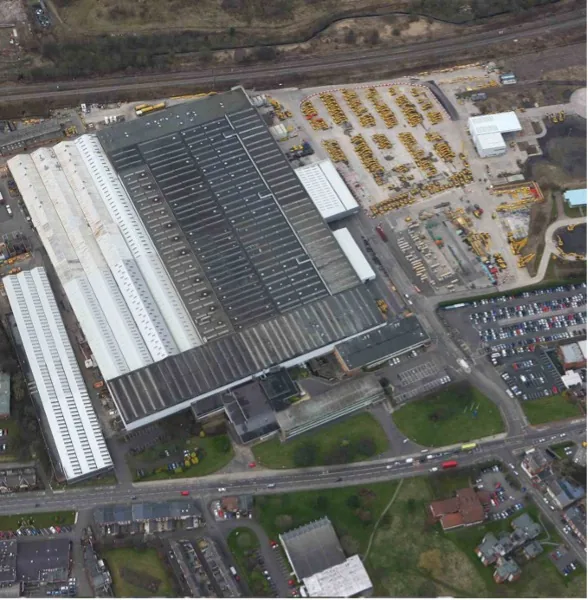
Komatsu is one of the world’s leading manufacturers of heavy-duty construction and mining equipment. It’s 200,000 sqm factory, in Birtley, Durham, is a major production facility employing almost 500 people. It makes 1,000 crawler excavators and working gear excavators every year. We were asked to survey the whole site. After a full risk assessment and successful tender, we were awarded the contract to supply and install lightning protection systems to all site structures. This comprised extensive roof-mounted air terminal networks and over 60no earth locations.
Free quote
Tell us about your building
Tell us where the building is and what you need. An engineer replies with a price and the next available date.