
Worried About Lightning Damage? We Keep Your Protection Working
Lightning Protection Maintenance Service
Lightning Protection Testing and Inspection Across the UK
For Churches, Schools, Warehouses, Factories and Listed Buildings
- BS EN 62305 testing
- Written report every visit
- Faults ranked by urgency





Get a free quote for lightning protection maintenance
Tell us where the building is and what you need. An engineer replies with a price and the next available date.
Our lightning protection maintenance service keeps your lightning protection system working, wherever your building sits in the UK. We inspect, test and repair, so a lightning strike has a safe path to the ground.
Lightning Protection Testing UK looks after lightning protection systems on churches, schools, hospitals, hotels, factories, warehouses and tall buildings. Most owners call because an insurer wants a certificate, the annual inspection is due, or a storm has them worried. Send your details through our contact form and we will give you a free quote.
 Maintenance
 Repair
Why Does Your Lightning Protection System Need Regular Maintenance?
A lightning channel is only 2 to 3 centimetres wide. The air around it can reach about 30,000°C, roughly five times hotter than the surface of the Sun. One lightning strike can push that much energy through a building.
The UK sees around 200,000 to 300,000 lightning strikes each year. That works out at roughly 550 to 820 a day, although most arrive in storms. During one five-day storm outbreak in July 2014, 62,277 lightning strikes were recorded across the country.
Storms can happen at any time of year, and lightning activity peaks in summer after hot, humid days. Your lightning protection systems need to be ready all year.
What Does a Lightning Protection System Actually Do?
+A lightning protection system does not attract lightning. It cannot stop a storm either.
It gives the current a controlled, safe path to the ground. Your lightning protection measures work as a chain. The airstrike components on the roof take the hit, down conductors carry the current down the building, and grounding systems channel it safely into the earth.
What Happens When a Lightning Strike Hits a Neglected System?
+Lightning strikes can cause fires, explosions and injuries. You cannot stop such events, but a healthy system limits the harm. A poorly maintained one can also create dangerous step and touch potentials, which are voltages on the ground and on metalwork that put human life at risk.
Inadequate lightning protection can disrupt critical building systems and cause structural damage. Lightning can also damage sensitive electronic equipment, and electrical equipment repairs add up fast. Routine inspections can prevent costly repairs and operational downtime after a lightning strike.
In the first quarter of 2026, UK insurers paid about £1.5 billion in property claims. The average weather-related claim reached £6,040, the highest first-quarter figure on record. Those numbers cover several weather causes, not only lightning.
How Do Weather and Building Changes Wear Down Protection Systems?
+Deterioration comes from weather, corrosion and physical damage. Conductors, clamps and earth connections loosen, rust or get knocked, and a joint that was once tight becomes a weak point.
Buildings change too. Roof plant, solar panels, aerials and extensions can alter the original protection arrangement. Existing older systems often no longer match the building. Regular inspections help identify these deficiencies before a storm does.
What Do We Check During Every Maintenance Visit to Your Building?
Every lightning protection maintenance visit follows a documented, risk-based programme built on BS EN 62305 and your risk assessment. Our aim is to minimise danger to the people inside and around your building.
How Do We Visually Inspect the Roof Level and Down Conductors?
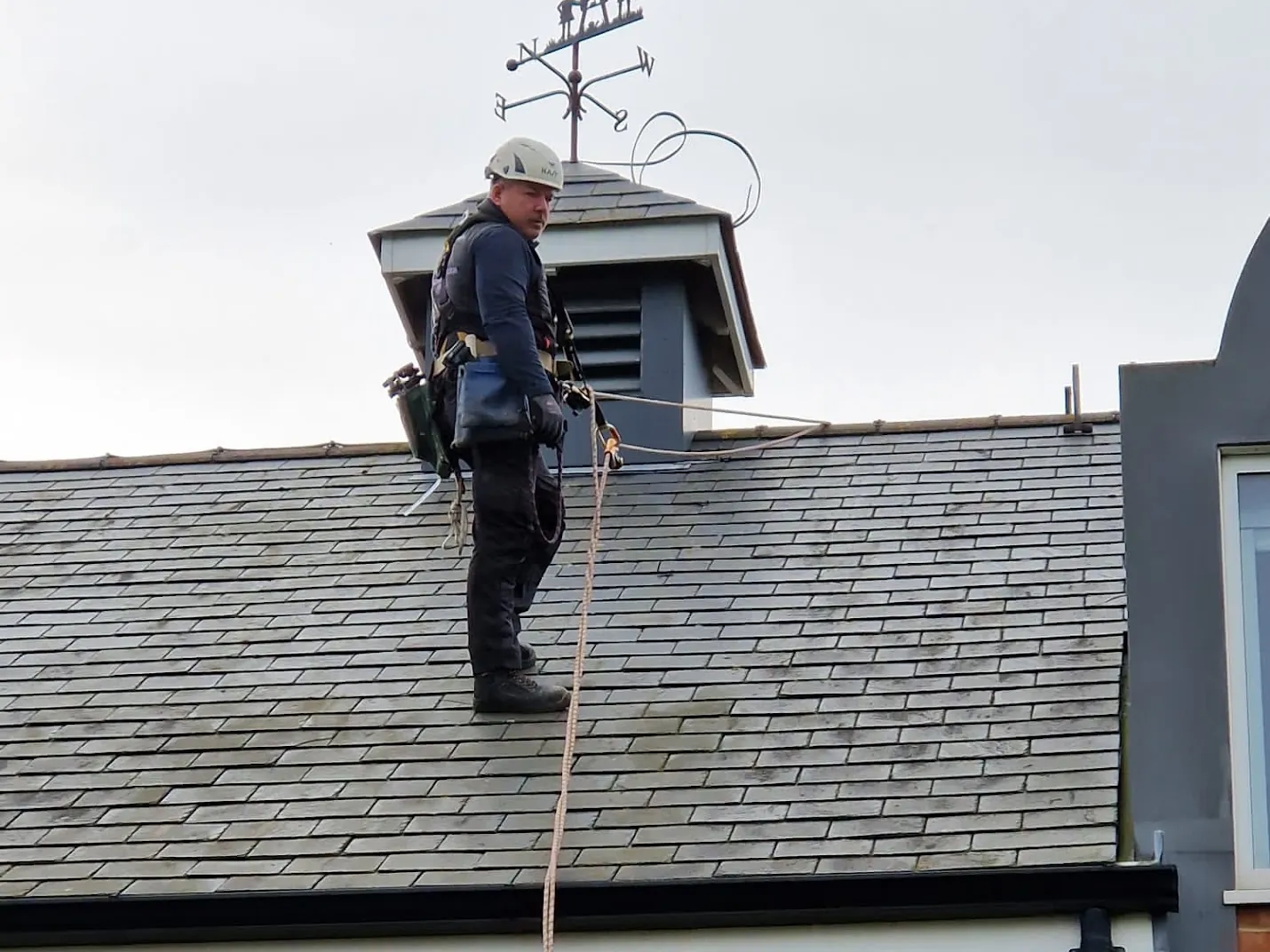
+We start with a visual inspection. At roof level, we look at the air termination elements and airstrike components, the rods and tapes that take the strike. Each part is visually inspected for corrosion, loose fixings and damage.
Then we follow the down conductors to the ground. This visual inspection looks for breaks, bent tape and poor joints, and for new roof equipment that your system was never designed for.
How Do We Run an Earth Resistance Test and Check Continuity?
+Next comes the electrical side of lightning protection testing. Continuity testing proves that every part of the lightning conductor system is still electrically joined up. A break in the chain sends the current looking for another way down.
Then we carry out an earth resistance test on each earth point. Ground resistance testing confirms that your earthing system still does its job. If a reading is too high, we tell you what to fix.
Corroded or dried-out grounding systems often fail first, so a weak earthing system leaves everything else exposed. Before we leave, we confirm the system remains effective, or tell you why it does not.
How Do We Check Surge Protection Devices and Bonding?
+Surge protection devices help prevent damage from power surges caused by lightning. Each surge can wear a device down, and a worn one often looks fine while doing nothing. Our surge protection checks pick out devices that earlier surges have degraded.
We also check the bonds between the lightning protection system and nearby metalwork. For electrical and electronic systems, good bonding and electromagnetic shielding cut surge damage to your electrical equipment and electrical systems.
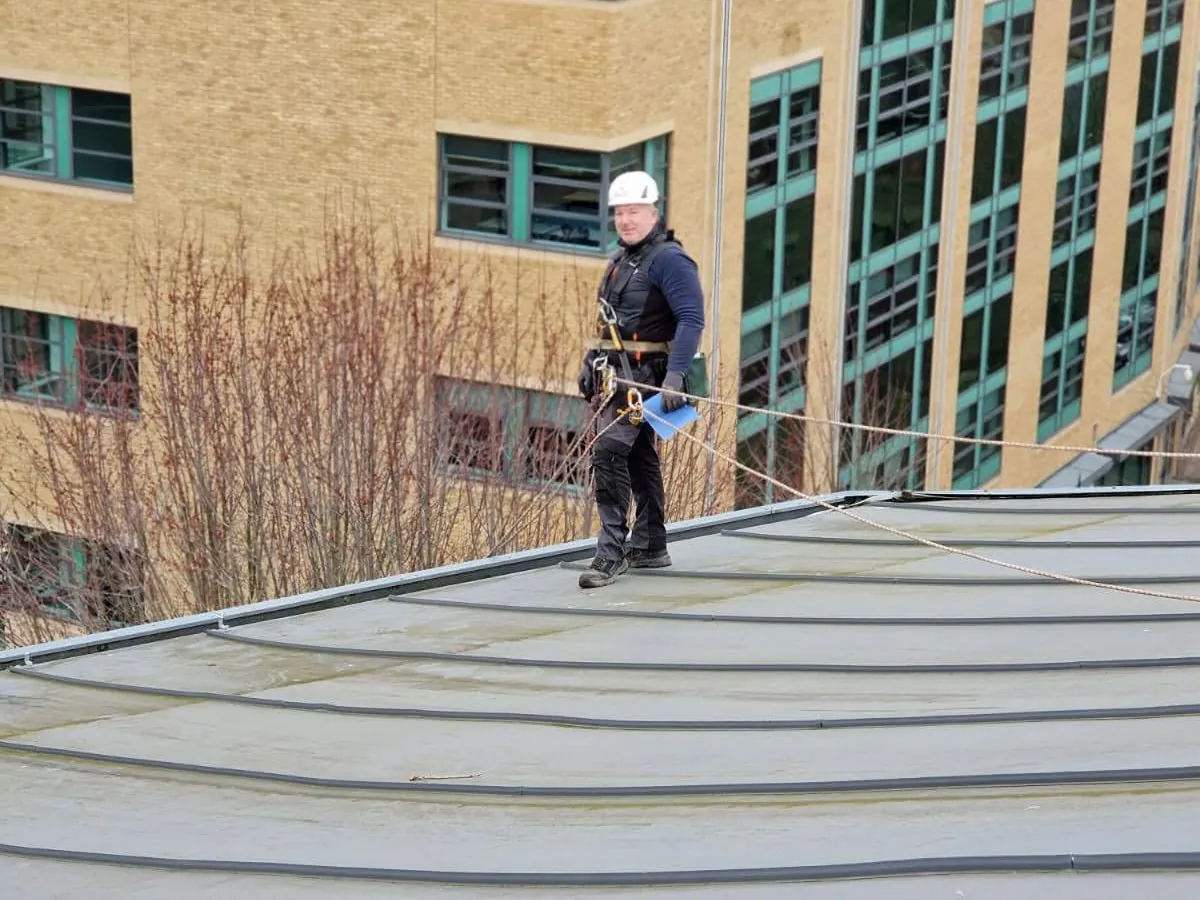 Inspection
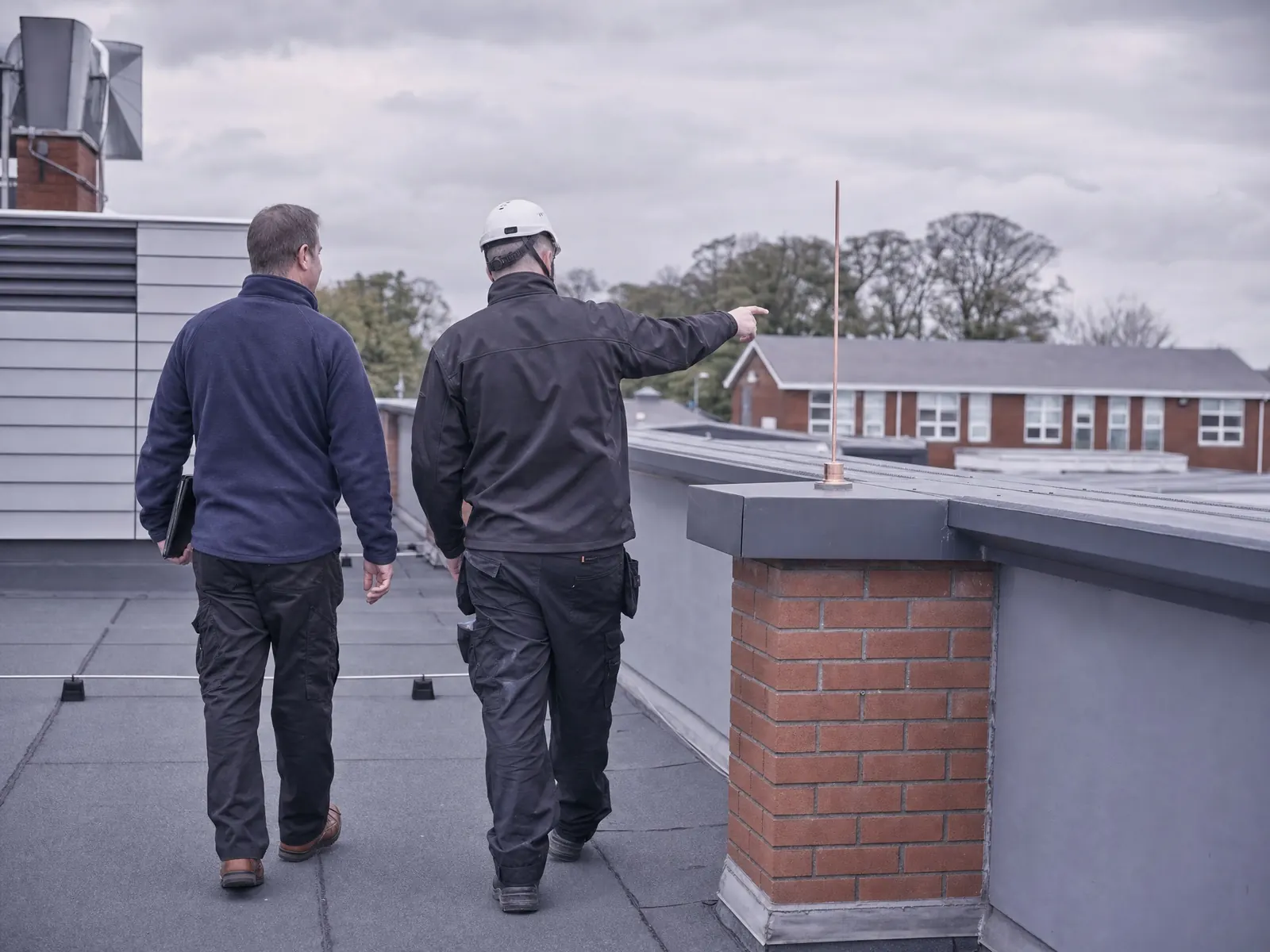 Standards
Which British Standards and Safety Laws Cover Our Work?
British Standards tell us how to do the job, and workplace safety law tells you why it matters. We cover both, so your compliance holds up.
What Does BS EN 62305 Say About Inspection and Testing?
+BS EN 62305 is the main standard for lightning protection in the UK. It was refreshed through the BS EN IEC 62305:2024 series, which covers general principles, risk management, physical protection of structures and the protection of internal electrical and electronic systems.
BS EN 62305 also outlines how to carry out inspection, testing and maintenance. We follow the relevant British Standard on every job. Other British Standards, such as BS 7671, cover wiring and surge protection.
Is Lightning Protection Testing a Legal Requirement?
+For many owners, keeping electrical systems safe is a legal requirement. People call it the Electricity at Work Act, but the proper name is the Electricity at Work Regulations 1989. These work regulations say systems must be maintained to prevent danger.
If you run a workplace, treat the Electricity at Work Act as covering your lightning system. Regular maintenance supports compliance with safety standards, and insurers may ask for certification and maintenance records showing BS EN 62305 compliance.
How Often Should You Book Lightning Protection Testing?
Lightning protection systems should be inspected and tested at least every 12 months. That is annual testing, and it is the usual rule for most buildings. Regular inspections at regular intervals stop small faults growing into big ones.
Some sites need more frequent inspections. Tall buildings, exposed hilltops, hospitals, heritage sites and stores of flammable stock sit higher on the risk scale. We set your schedule from a risk assessment. After a nearby lightning strike, book a check sooner.
Environmental factors count as well. In coastal air, heavy rain and polluted environmental conditions, corrosion speeds up, so frequent inspections make sense.
Do Modern Systems and Older Systems Need the Same Care?
+Modern systems use stronger parts, but they still need regular testing. Older ones need more attention, because tapes and joints have had decades of weather.
Regular testing shows your lightning protection systems remain effective. Ongoing maintenance and regular testing turn hope into proof, and regular inspections give you the readings.
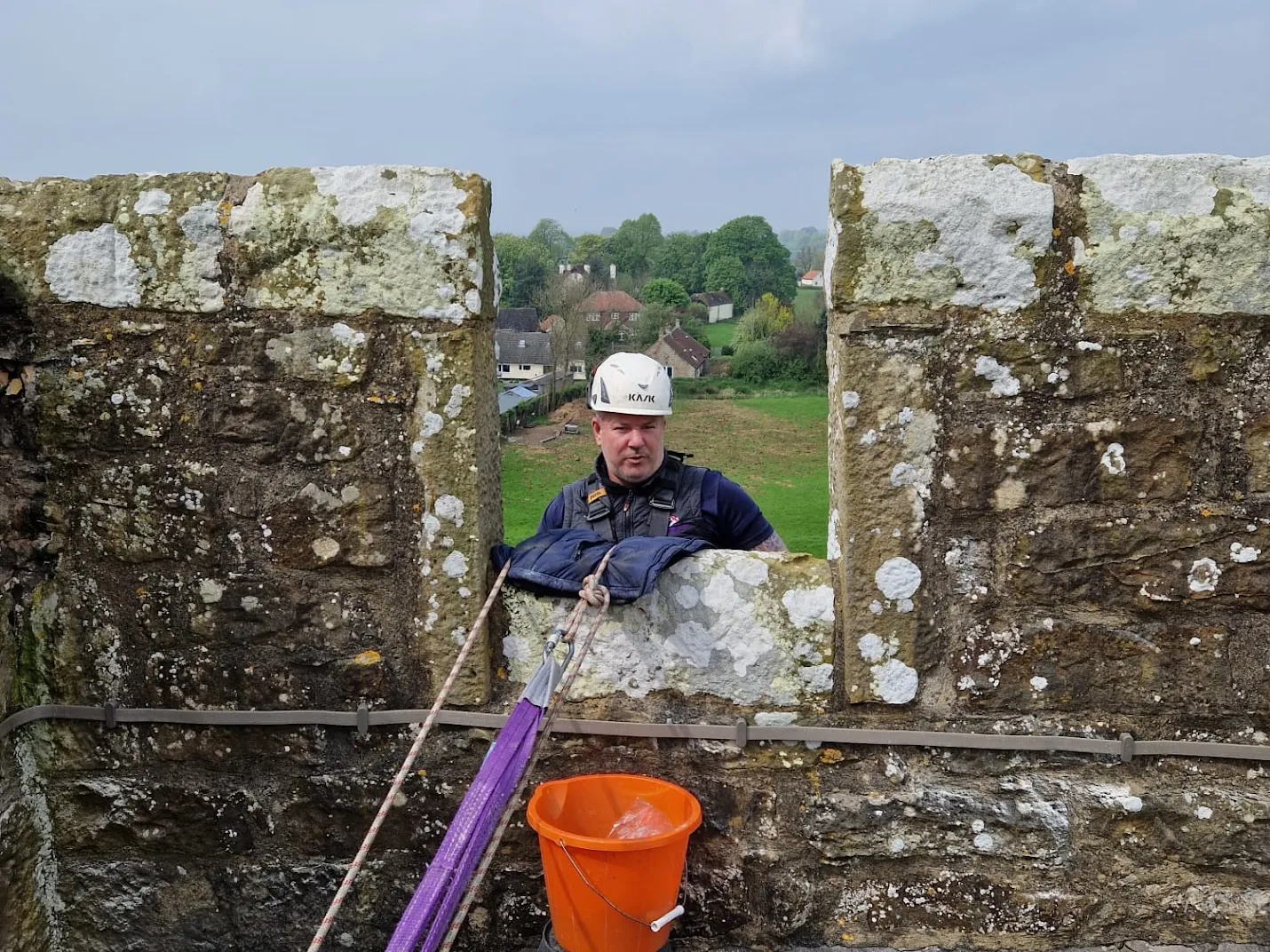 Annual visit
How Much Does Lightning Conductor Maintenance Cost?
These are our rough prices based on recent projects, and they exclude VAT. A small lightning protection system on a simple building with a few down conductors usually costs about £300 for a visit with inspection, testing and a report. A mid-sized building, such as a school, church or small factory, usually costs about £500.
Large or complex sites usually start from about £1,000. Tall buildings, hospitals and big factories sit here, and the biggest sites can reach £1,500 or more. Repairs and new parts, including replacement surge protection devices, cost extra.
Building size, roof access and the size of your earthing system move the price.
The price is a rough guide and the actual cost varies from building to building. Please get in touch using our contact form for an accurate quote.
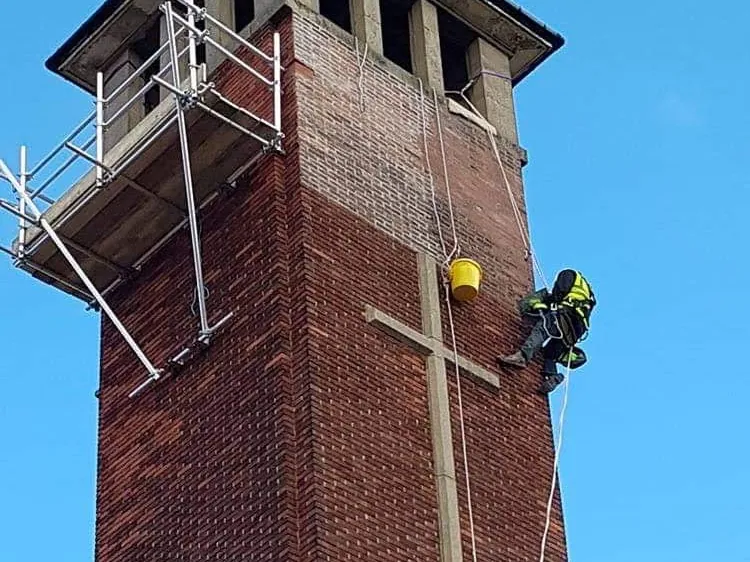 Rope access
Why Choose Lightning Protection Testing UK for Your Maintenance?
We are a UK market leader in lightning protection testing, with extensive experience across every kind of building. We keep your lightning protection system functioning effectively, year after year.
You get excellent service from the first call to the final report. Our reports follow BS EN 62305 to ensure compliance, so your lightning protection system continues to meet the standard.
What Is in Your Detailed Report?
+After each inspection, you receive a detailed report. It works as an auditable maintenance record and covers:
- Every test reading, including earth resistance results
- Faults we found, ranked by risk
- The condition of your surge protection devices
- Repairs we recommend, and what each one costs
- A compliance certificate you can show an insurer
Regular lightning protection maintenance is one of the safety measures that helps protect the people inside your building and reduces the risk of fires from lightning-related surges. It lets your protection remain effective year after year.
Who Books This Service and Where Do We Work?
Our service runs UK wide, delivered by a specialist lightning protection company. A village church, a school on a hill, a warehouse on an industrial estate and a hotel in a city all get the same care.
People book us when new roof plant or solar panels go up, after an extension, or when an inspection date has slipped. If a strike has already hit, our post-lightning strike inspection covers that. If you have no lightning protection system at all, our other lightning protection services cover installation and upgrades.
How Does Booking Work Step by Step?
+- You send your details and any drawings through our contact form.
- We give you a free quote and agree a date.
- Our engineers inspect and test the lightning protection system on site.
- You receive your report, and we talk you through any repairs.
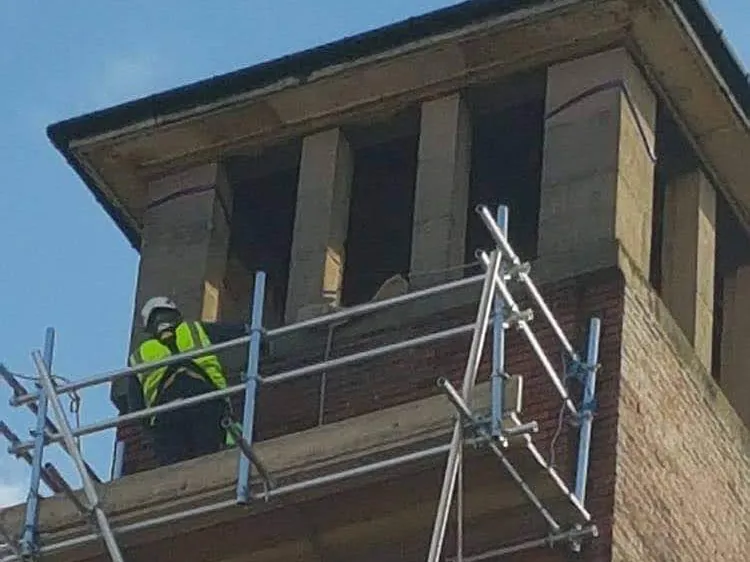 Towers
 Free quote
Get Your Free Quote From Lightning Protection Testing UK Today
Do not wait for the next lightning strike to find out the system is not working. Lightning Protection Testing UK will carry out the inspection, test and report, so your lightning protection continues to protect your building.
Tell us the type of building, roughly how big it is and when it was last tested. Send it through our contact form for a clear price and a date.
Lightning protection maintenance FAQs
What is a lightning protection maintenance service?
A lightning protection maintenance service is a scheduled inspection, test and repair programme that keeps your lightning protection system able to carry a strike safely to the ground. Our engineers check the roof level components, down conductors, earthing, surge protection devices and bonding, then issue a detailed report. Send your details through our contact form for a free quote.
How often should lightning protection be tested in the UK?
Lightning protection should be tested in the UK at least every 12 months, which is the usual annual testing rule for most buildings. Tall buildings, exposed hilltops, hospitals, heritage sites and stores of flammable stock can need more frequent inspections, and we set your schedule from a risk assessment. Book a check sooner if lightning has struck nearby.
How much does lightning conductor maintenance cost?
Lightning conductor maintenance usually costs about £300 for a small system on a simple building and about £500 for a school, church or small factory, excluding VAT. Large or complex sites usually start from about £1,000, and the biggest can reach £1,500 or more, with repairs and new parts costing extra. These figures are a rough guide and the actual cost varies, so please use our contact form for an accurate quote.
Is lightning protection testing a legal requirement in the UK?
Lightning protection testing is, for many owners, a legal requirement, because the Electricity at Work Regulations 1989 say electrical systems must be maintained to prevent danger. If you run a workplace, treat your lightning protection system as covered by those regulations. Regular maintenance also supports compliance with safety standards.
What does a lightning protection maintenance visit include?
A lightning protection maintenance visit includes a visual inspection of the roof level components and down conductors, continuity testing, an earth resistance test on each earth point, and checks on surge protection devices and bonding. Every visit follows a documented, risk-based programme built on BS EN 62305 and your risk assessment. You then receive a detailed report with test readings, faults ranked by risk and recommended repairs.
Will my insurer ask for a lightning protection certificate?
Your insurer may ask for a lightning protection certificate and maintenance records showing BS EN 62305 compliance. Our report includes a compliance certificate you can show an insurer, alongside every test reading and the condition of your surge protection devices. Tell us your building type and size through our contact form for a clear price and a date.